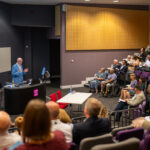
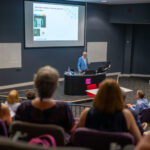
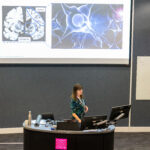
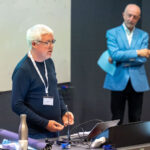
The Advanced Neurotherapies Centre hosted the inaugural neuro multi-disciplinary research group (MDRG) meeting this month in Cardiff.
The collaborative meeting took place on 11 July and was chaired by ANTC director Professor Liam Gray.
The session brought together 37 researchers from across the neuro research community for an afternoon of discussion and networking.
The session featured 11 rapid-fire flash talks covering everything from advanced therapy medicinal product (ATMP) delivery and development to clinical trial design.
Professor Liam Gray said: “It was great to welcome colleagues to the centre here in Cardiff. The aim of the meeting was to spark fresh ideas and foster new partnerships—and it’s already working, with several exciting collaborations beginning to take shape.
“This kind of cross-disciplinary collaboration is exactly what we hoped to create. It was fantastic to see so many researchers coming together to share, connect, and innovate.”
The neuro MDRG is part of a wider series of themed meetings, organised by Advanced Therapies Wales, designed to build bridges across research areas and accelerate progress in advanced therapies.
The next neuro-focused MDRG session is set for will take place in on Friday 14 November 2025 and anyone with an interest in neurological research is warmly invited to join.
For more information or to get involved, please contact antc@cardiff.ac.uk
The event brought together researchers, clinicians, industry leaders, and individuals with lived experience of neurological conditions.
It marked a significant milestone in the evolution of the former Brain and Intracranial Neurotherapeutics (BRAIN) Unit, now transformed into ANTC with the support of a £2.9 million investment from Health and Care Research Wales.
Building on the legacy of the BRAIN Unit, the Advanced Neurotherapies Centre is dedicated to improving the delivery of life-changing medicines directly into the human brain.
As one of the few centres globally with the expertise and research excellence to tackle this challenge, ANTC is focused on the safe and effective administration of Advanced Therapy Medicinal Products (ATMPs) for treating neurological conditions.
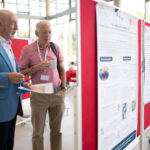
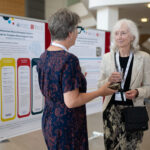
The launch event showcased the full spectrum of the centre’s translational research, featuring keynote presentations from international research leaders, NHS partners, public involvement collaborators, and industry experts in gene and cell therapy. Attendees explored a poster exhibition highlighting the depth and breadth of ongoing work, spanning every stage of the research journey.
Professor Liam Gray, director of the Advanced Neurotherapies Centre, said: “This launch marks more than a name change—it’s a bold step forward in our mission to bring cutting-edge therapies to those living with neurological conditions.
“By uniting world-class research, clinical expertise, and the voices of those with lived experience, we are creating a centre that is truly built for impact.”
Speakers included Dr David Fluck from Cardiff and Vale University Health Board and Gareth Cross from Health and Care Research Wales, who emphasised the importance of collaborative partnerships and the unique opportunity Wales presents for developing advanced therapies for neurodegenerative diseases.
Professor Wendy Larner, Vice-Chancellor of Cardiff University, set the scene for the research environment, while ANTC director Professor Liam Gray outlined the centre’s mission and the urgent need for its work.
A trial participant, Gareth, also shared his personal perspective of taking part in a clinical trial. Read more from Gareth in his Clinical Trials Day blog post.
Professor Anne Rosser presented on the transformative potential of ATMPs in treating previously untreatable brain diseases. International guest speaker Professor Leslie Thompson from the University of California, Irvine, provided expert insight into the journey of ATMP translation.
The afternoon session featured Professor Liam Gray and Dr Dmitri Sastin discussing the critical role of Centres of Excellence and the challenges of delivering ATMPs into the brain. Dr Stephen Mittermeyer from AskBio concluded the day with an industry perspective on convention-enhanced delivery (CED), highlighting ANTC’s unique position in bridging gaps in the development pipeline.
This inspiring event set the tone for the next five years of the centre’s work and reaffirmed the power of collaboration in transforming the future of brain health.
Jo-Ann Baker, ANTC’s centre manager, concluded: “Our event was a celebration of the incredible teamwork and dedication that has brought us to this point.
“It’s also a reminder of the responsibility we carry—to push boundaries, to collaborate meaningfully, and to ensure that our research translates into real-world benefits for patients and families affected by neurological conditions.
“Thanks to everyone who joined us and contributed to a special day.”












Photography by Matthew Horwood.
Clinical Trials Day (20 May) is an annual opportunity to reflect on all that has been accomplished thanks to clinical trials and the people behind them. In this blog, Gareth has kindly shared his experience of taking part in a neurosurgical advanced therapy trial.
Gareth’s story
Hi, I’m Gareth. Last year, I took part in a neurosurgical clinical trial testing a new gene therapy for Huntington’s disease (HD).
It was a big decision; one that surprised many of my family and friends but one that I’m proud I made. To that end, I wanted to share a bit about what the journey was like, why I chose to say yes and why I would hope others will also choose to embrace advanced therapies.
Before the trial
I was diagnosed HD gene positive in September 2021. This wasn’t altogether a surprise as I had witnessed several members of my family suffer at the hands of this dreadful condition.
Quite soon afterwards, I was invited to the Huntington’s clinic in Cardiff for a chat with Professor Anne Rosser. We talked openly about HD and what options, though limited, were available.
I was quite uplifted by this information, not realising the huge amount of research that was going on behind the scenes.
I decided that I wanted to help in any way shape or form and left the clinic far more hopeful than when I arrived.
Deciding to take part
My decision to take part in my trial was quite simple in the end, but I was certainly helped by background information I had gathered through ongoing meetings with Professor Rosser and my involvement with the HD Advisory Board, which I am a proud member of.
Whilst my initial motivation was personal, I soon became aware of the much wider influence that Advanced Therapies could have on so many lives.
The following consultations with Professor Liam Gray and his team only further enhanced my determination to get involved.
I appreciated the honesty and respect shown by everyone and I felt a high level of trust immediately. This connection was vital for me and helped erase any doubts in my mind.
The clinical trial experience
Committing to a trial isn’t just about the surgery – I learned that quite quickly after numerous scans, examinations and blood tests. Each part of the process is vital, and I could sense the collective commitment to this project from every individual team member.
Even the hospital staff, though not directly involved, showed huge interest and enthusiasm towards this ground-breaking treatment. This certainly put me at ease as, quite honestly, I am not a fan of hospitals!
Whilst I can’t recall the surgery, I do remember the moment I woke up with a sense of relief and an element of surprise about how good I felt.
The aftercare was immediate and detailed, and I felt comfortable and well looked after.
Reflections
Taking part in the trial gave me hope, and I’m proud I did it.
Even if it hadn’t helped me personally, knowing I contributed to something that might help others was worth it.
I’d encourage anyone offered the chance to be part of research to at least find out more. If I was asked to do it again, I would.
Advanced Therapies offer a new and exciting route into tackling previously untreatable conditions, and I feel privileged to have experienced it first-hand.
Thank you to Gareth for sharing his story with us.
The ASPIRE-FTD clinical trial will investigate the use of a gene therapy in people with frontotemporal dementia.
A new clinical trial, delivered in Cardiff, will investigate the use of a one-time gene therapy to stop the disease progression in patients with frontotemporal dementia.
The ASPIRE-FTD Phase 1/2 clinical trial is recruiting patients in the UK to investigate the use of AVB-101, a gene therapy, in people with frontotemporal dementia with progranulin (FTD-GRN) gene mutations.
The trial, run by AviadoBio, will recruit patients from across Europe. The Advanced Neurotherapies Centre at Cardiff University and Cardiff and Vale University Health Board will be the UK surgical site for the trial, as the centre is the only place in the UK that can deliver drugs straight to the human brain in an MRI scanner for precise treatment and real-time imaging.
This new gene therapy, AVB-101, is a one-time therapy that has the potential to halt the progression of frontotemporal dementia. In order to fully understand its impacts on the brain, we need to overcome some of the barriers that can prevent drugs from reaching the brain and we also need precise measurement of how it’s working. At the Advanced Neurotherapies Centre, we are able to deliver drugs directly into the brain, targeting specific regions. Not only this, but we are able to do so in an MRI scanner, to get real-time imaging of the process and its impact.
AVB-101 is delivered as a one-time-only treatment using a minimally invasive stereotactic neurosurgical procedure directly to the thalamus – a key brain area affected in frontotemporal dementia.
David Cooper, Chief Medical Officer of AviadoBio, said: “Launching ASPIRE-FTD and treating our first patients with AVB-101 have been significant milestones in FTD-GRN research and gene therapy development. AviadoBio was built on pioneering research from King’s College London and the UK Dementia Research Institute. The opening of our UK clinical trial sites reflects this strong research heritage, and we’re proud to bring this clinical trial to the UK to make it more accessible to people living with familial frontotemporal in the region.”
We are delighted to be able to surgically deliver the ASPIRE-FTD trial in Cardiff, offering hope to patients living with frontotemporal dementia in the UK. The Advanced NeuroTherapies Centre is the only UK and one of two European centres able to undertake this type of work. This trial represents a major step forward in the search for a treatment in frontotemporal dementia, potentially bringing a new therapy to reality for patients.
Suzanne Rankin, Chief Executive Officer at Cardiff and Vale University Health Board, and Senior Responsible Officer for the Advanced Therapies Wales Programme, said: “It’s great to see these advanced therapies positively impacting patients across Wales. I’m proud that Cardiff and Vale University Health Board continue to contribute to this exciting research. It’s brilliant to be able to support such pioneering work, and I’m grateful to our researchers and wider team involved for their hard work and dedication.”
The Advanced Neurotherapies Centre was formerly the BRAIN Unit, hosted by Cardiff University, and is funded by Health and Care Research Wales.
The BRAIN Unit, which will become the Advanced Neurotherapies Centre from April 2025, is pleased to confirm that it will receive £2,856,309 of sustainability funding in a major announcement by Health and Care Research Wales this week.
Health and Care Research Wales has announced Research Development Infrastructure funding for 17 research centres across Wales, including five new organisations.
The funding has been awarded across two categories – sustainability awards, for currently funded groups to maintain effective models of practice and support a trajectory towards self-sustainability, and catalytic awards, to boost capacity and capability in areas of health and care need and emerging Welsh research strength.
Professor Liam Gray, BRAIN Unit director, said: “We are delighted to build on the achievements of the last 10 years as the BRAIN Unit, consolidating and expanding our position as the lead UK centre for the delivery of advanced therapies directly to the human brain.
“From April, we will become the Advanced Neurotherapies Centre, continuing to develop and deliver ground-breaking treatments for the benefit of patients living with neurological and neurodegenerative disease. Thank you to Health and Care Research Wales for their ongoing support.”
The full list of centres that will receive funding are:
Sustainability funding
- National Centre for Mental Health (£2,999,894)
- Wales Cancer Research Centre (£4,866,172)
- Secure Anonymised Information Linkage Databank (SAIL) (£4,551,338)
- Wales Centre for Primary and Emergency Care Research (£2,996,483)
- Wales Cancer Biobank (£2,363,320)
- Health and Care Economics Cymru (£1,865,815)
- Children’s Social Care Research and Development Centre Partnership (CASCADE-Partnership) (£2,999,636)
- Centre for the Development and Evaluation of Complex Interventions for Public Health Improvement (DECIPHer) (£2,886,936)
- Wales Kidney Research Unit (£2,984,527)
- Centre for Trials Research (£4,742, 424)
- National Cardiovascular Research Network (£2,073,161)
Catalytic funding
- Wales Applied Virology Unit (£3,000,000)
- National Centre for Suicide and Self-harm Prevention (£2,085,939)
- Centre for Social Care and Artificial intelligence LEarning (£1,815,416)
- Women’s Health Research Wales (£3,013,936)
- Centre for Vision Services Research (£1,746,729)
Jeremy Miles, Cabinet Secretary for Health and Social Care, said: “Research has a critical role to play in helping us to achieve our aim of A Healthier Wales. This is an important investment in new and exciting areas of research, including women’s health; preventing suicide and self-harm and AI – I hope it provides real evidence over the next five years, which will help shape services and care for people across Wales.”
Michael Bowdery, Joint Interim Director at Health and Care Research Wales and Head of Programmes, Research and Development Division at Welsh Government, said: “This announcement represents a significant investment in our funded infrastructure in Wales over the next five years, and reflects our ambition to advance research capability aligned with unmet health and social need in key policy areas.
“Our approach to providing this funding is based on two criteria – firstly, where there is a clear and compelling research and evidence need in the area for Welsh Government, the NHS and social care system in Wales; and secondly, where there is demonstrably strong or emerging research capacity and capability in the area.
“These centres embody the principle of research having the power to make a difference to people’s health and wellbeing, and we are pleased to be able to support their activity in this field.”
For more information visit: www.healthandcareresearchwales.org
BRAIN Unit director Professor Liam Gray spoke at a recent event hosted by the British Neuroscience Association (BNA) at the Senedd on Tuesday 17 September 2024.
The event, titled ‘Neuroscience and Mental Health Research: Spotlight on Wales’, aimed to emphasise the importance of neuroscientific research to tackle health challenges in Wales to policymakers.
Government ministers, funders and other researchers from across Wales gathered to hear about a variety of neuroscientific research, including that of the BRAIN Unit’s who are developing and delivering advanced therapies for neurodegenerative diseases such as Huntington’s disease, which affects around 7000 people in the UK. Currently, the BRAIN Unit is one only five centres worldwide delivering a potentially game-changing gene therapy UniQure AMT-130 for people with Huntington’s Disease.
Professor Gray said, “We are at a pivotal and exciting stage in neuroscience research, with Advanced Cell and Gene Therapies holding significant promise for disease modification in heretofore untreatable neurological conditions. We are one of the few centres in the world performing these early phase clinical trials, providing the evidence needed for their translation into clinical care. ”
Looking to the future, Professor Gray announced that the BRAIN Unit has plans to rebrand in April 2025. The unit will be known as the Advanced Neurotherapies Centre and will continue to work towards being a Centre of Excellence for the development and delivery of advanced therapeutics with trials planned for dementia and Parkinson’s Disease.
Learn more about the future of the BRAIN Unit in our annual report.
On Thursday 10 October 2024, Health and Care Research Wales hosted its annual conference in Sophia Gardens, Cardiff.
The topic of this year’s event was ‘research matters’, and the drew researchers, clinicians and public involvement figures from across the country.
BRAIN Unit Director, Professor Liam Gray, attended this year’s conference as a panellist, discussing how collaboration across sectors drives investment and bring greater benefit to patients in Wales.
Professor Gray had the opportunity to discuss the significant achievements of the BRAIN Unit, how collaboration between BRAIN and partners, including the NHS has resulted in some world leading advanced neurotherapy clinical trials taking place here in Wales.
Hailing from Ireland, Professor Gray explained that unique collaborative opportunities drew him to Wales. He also announced plans for the BRAIN Unit as it becomes the Advanced Neurotherapies Centre and its ongoing aim to become a Centre of Research Excellence, having been awarded another five years of funding from the Health and Care Research Wales infrastructure.
Attendees also had the chance to find out more about BRAIN on its interactive stand throughout the day, with a new clinical trials snakes and ladders game which allowed participants to better understand the challenges and rewarding results of the clinical trials process.
We look forward to returning to next year’s conference as the Advanced Neurotherapies Centre and we will be sharing more information on our new name soon.
Ataxia is a neurodegenerative condition which affects one in 50,000 people. This is Alan’s story, founder of a charity called Ataxia and Me.
What is ataxia?
Ataxia comes from the Greek word, meaning ‘lack of order’. People with ataxia experience problems with movement, balance and speech. Although ataxia is degenerative (and this very slow in my case), there is currently no cure for this life-limiting condition.
Rare conditions affect less than one in 2,000 people; ataxia affects one in 50,000! This means that ataxia is extremely rare, and it is difficult to connect with others who share lived experience of this condition.
My cerebellar ataxia diagnosis
I have walked with a wobble and spoke with a slur from an early age. Many people thought, “Oh, that’s just Alan!”. I also achieved good qualifications at school and went on to run my own electrical contracting business. However, as my condition progressed I soon found out that lack of coordination does not mix with electrical circuitry. Still, I persevered until I started to notice that menial tasks required more and more concentration – even buttering my sandwiches for work.
For many years, I visited my GP on numerous occasions who told me to take time off work and rest. One day, my usual GP was unavailable, and I saw a locum who had recent knowledge of ataxia symptoms. He referred me for more neurological tests and I received a diagnosis for cerebellar ataxia. The consultant explained the diagnosis, its outcomes and that nothing could be done.
A support network for ataxia
When I got home, I started to research ataxia in more detail and began to find that there wasn’t much helpful information or support out there. Whilst I receive some care from my local hospital, I have to travel to Sheffield to receive specialist ataxia care – some 258 miles away, and five hours by train!
That was when I established Ataxia and Me, a patient-led charity based in West Wales with a global following. Together, we share our lived experiences of this extremely rare condition.
If you are an ataxia patient or relative, carer, friend or healthcare professional, we invite you to support us in promoting awareness and sharing helpful resources. Just go to ataxia-and-me.org.
Alan Thomas
Founder of Ataxia and Me
Follow us on X and Instagram: @ataxia_and_me / @Atacsia_a_fi
Dr Chloe Ormonde is a lab technician at the BRAIN Unit. In this piece, Chloe shares her career journey so far and why she enjoys working in the laboratory.
About me
I’m Chloe, and I’ve worked for the university for over 16 years. I studied at Cardiff University myself, completing a BSc degree in Pharmacology and a PhD in cardiovascular sciences. I joined the laboratory group of Professor William Gray and the BRAIN Unit at the end of 2016. When I’m not in the lab, I’m a busy mum to two children, a son who is five and a daughter who has just turned 16 months. My time outside of work is normally spent exploring the various playgrounds around Cardiff, building LEGO and practicing ‘first words’ with my daughter. I’m a keen cook, and I enjoy experimenting and trying out new recipes with my family.
My role at the BRAIN Unit
A laboratory technician has the responsibility of overseeing all activities that take place within the research team. On a typical day, we assist in preparing for collection, and the processing of primary human tissue, which is obtained from consented patients undergoing elective neurosurgery at the University Hospital of Wales (UHW), Cardiff. Under the Human Tissue Act, we are responsible for keeping track of all human tissue activities taking place within our research team, and keeping inventories regularly updated.
We also provide technical support for our research group and are responsible for tasks such as ordering and stock checking, protocol generation, formulation of risk assessments and standard operating procedures, as well as providing laboratory support by training new members of staff and students to work safely within the lab and ensuring the correct usage of laboratory equipment.
Why are lab technicians so important?
The technician role is integral to the research team. It is important because we carry out practical and technical support to all staff and students working within the laboratory. We deliver an array of essential, routine laboratory techniques to support any ongoing scientific research projects and are involved in receiving, labelling, and analysing samples. We are responsible for making sure the laboratory remains a user-friendly space, by keeping the lab benches clean and clutter free, disposing of rubbish and keeping track of laboratory consumables such as reagents and plasticware.
What I love about being a lab technician
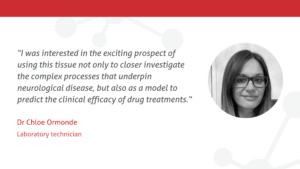
I’ve always enjoyed tissue culture studies and the fact the BRAIN Unit works directly with human tissue collected straight from surgery really piqued my interest in this role. I was intrigued to see how a 3D representation of normal and diseased brain tissue could be generated in the laboratory. I was also interested in the exciting prospect of using this tissue not only to closer investigate the complex processes that underpin neurological disease, but also as a model to predict the clinical efficacy of drug treatments. These processes help us to identify resistance, toxicity, and aid therapeutic strategies.
With thanks to Chloe for her contributions.
The BRAIN Unit were delighted to support the launch of the new Huntington’s Disease Centre in Wales which took place in Cardiff University’s Hadyn Ellis Building on Wednesday 8 March, 2024.
Huntington’s Disease (HD) is an inherited neurodegenerative disease which causes brain cells to be lost, impacting thinking, movement, behaviour and mental health.
During a warm welcome to the launch event, Professor Anne Rosser explained that the launch of the Huntington’s Disease Centre in Wales marks a new era for HD research. The aim is to bring together researchers across multiple disciplines, institutions and sectors across Wales for collaboration and to promote world leading research into HD.
The local breadth and depth of expertise in HD research from fundamental understanding of disease biology to the clinical testing of new therapies provides a great opportunity to achieve the ultimate goal of finding treatments that can slow down or stop HD progression. The centre also recongises the importance of continuing to provide support to people and families living with HD. Therefore, research into reducing the impact of HD on families, working alongside key patient-focussed organisations also features as a key theme within the centre.
The centre will continue to work alongside its collaborators within Cardiff University, which include the BRAIN Unit, National Neuroscience and Mental Health Innovation Institute (NMHII), the Centre for Neuropsychiatric Genetics and Genomics (CNGG) and the Cardiff University Brain Research Imaging centre (CUBRIC).
The BRAIN Unit looks forward to building on the existing foundation of excellence in HD through collaborative activity.

