Purple Day for Epilepsy takes place every year on March 26. To mark the global awareness day this year, Peter Roberts from BRAIN Involve has kindly shared his own story of being diagnosed with epilepsy and how he has supported neuroscience research at Cardiff University over the past two decades.
Peter’s first epileptic seizure was in the bathroom on 12th September 1994. It was followed by another seizure the next month and another in March 1995. Peter visited the hospital for a check-up and minor scan and no cause was found, but it was thought to be idiopathic epilepsy.
Peter said: “My doctor placed me on Epilim Chrono and I lost my driving licence for a year. As I worked in Aberdare and I had to travel to and from Barry, this caused a few problems, especially as commuting by train wasn’t totally reliable.
“I was taken off the tablets in 2006 but in 2007 I had another seizure and lost my licence again for a year. I have, as a precaution, stayed on Epilim ever since. To this day no cause has been found for my problem.”
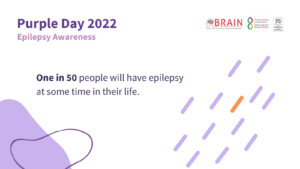
Peter’s diagnosis of idiopathic epilepsy and the medication he takes to manage the condition have had an impact on his life.
He added: “Losing my driving licence has been the greatest inconvenience for me and I think Epilim has caused me recurring minor skin problems. It has also impacted my wife to a minor degree as she is always there to check I’m taking the tablets!”
After his diagnosis, Peter was asked to join the WERN group (Welsh Epilepsy Research Network): a group of people with epilepsy, led by doctors and researchers from Cardiff University, who met once a month to discuss their experiences and challenges.
Peter said: “Patients and family members were welcome at the WERN meetings which were held in Cardiff or Bridgend. One of the main doctors was Dr Cheney Drew and when this group folded, Cheney asked me if I would join BRAIN Involve. I gladly accepted and the rest is history.
“I have talked to researchers, students, and patients about likely problems and now meet people with Multiple Sclerosis, Parkinson’s Disease, and Huntington’s Disease.
“There are various levels of epilepsy, mine is minor and appears well controlled. Others are not so lucky, having multiple seizures every day and night and requiring full-time care. This is bound to have an effect on their education, job prospects, and all that follows in their future life.
“Research, like the work happening at the BRAIN Unit, is so vital for these people so that they can regain some sort of normality in everyday life. I’m really pleased to play my part in supporting the research by being a member of BRAIN Involve.”
BRAIN Involve is a public involvement group made up of people who are, or have been, directly affected by neurological diseases such as epilepsy, Huntington’s disease (HD), Multiple Sclerosis (MS) or Parkinson’s disease (PD).
By bringing their personal experiences to the research table, members contribute to the design, development, implementation, and dissemination of the BRAIN Unit’s research around brain repair and developing new therapies for brain conditions.
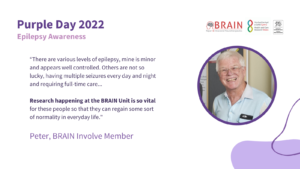
Peter concluded: “Sharing our lived experiences of epilepsy and other neurological diseases at BRAIN Involve can really have an impact on shaping the neuroscience research happening at Cardiff University and increase awareness of these conditions.
“If any member of the public knows of a family member or friend within any of the four problem areas listed above, please come along to our next meeting. We are currently meeting virtually and you would be very welcome. Never be afraid of asking for help, there will always be someone only too glad to be of assistance.”
BRAIN Involve brings together patients, carers, and academics to shape cutting-edge research into neurological and neurodegenerative diseases. You can find out more about how to get involved on our website.
A special thanks to Peter for sharing his story for Purple Day 2022.
In the 2018-20 award, the BRAIN Unit received funding to develop an Electronic Patient Record (EPR) system supporting clinical care and deep patient phenotyping in Multiple Sclerosis (Cardiff and Vale and Aneurin Bevan), Parkinson’s Disease (Abertawe Bro-Morgannwg) and Epilepsy (Cardiff and Vale).
The system is deployed via a secure internet-facing server behind the NHS firewall, allowing researchers to securely collaborate and contribute patient-level datasets. Towards the end of the award, a new multi-disciplinary module for the epilepsy surgery programme (Cardiff and Vale) was deployed. The PatientCare database is now well integrated and has cross-disciplinary use, improving the care of patients.
Developing the EPR system
We now wish to expand on this platform to develop research-ready cohorts, where detailed diagnostic and clinical phenotype data is maintained alongside patients’ consent to be approached for research, and tissue biologicals, most commonly serum and plasma for genetic and other disease biomarkers are collected and stored.
A programme is already in place for Multiple Sclerosis for patients in South Wales led by Professor Neil Robertson, utilising a clinical database ‘PatientCare’ and the Wales Neuroscience Tissue bank. We are developing a similar pipeline for patients with epilepsy, the PatientCare database is already being used to capture diagnostic and treatment data as part of routine clinical care.
Additional funding from the BRAIN Unit will go towards extending this work to a formal research proposal with NHS Ethics and R&D approval for tissue and para-clinical (namely brain scan (MRI) and electroencephalograph (EEG)) data collection with patient consent for storage and onward research, for patients with epilepsy attending specialist clinical in Cardiff and Vale and Cwm Taf health boards.
This supports one of the main objectives and strengths of BRAIN, which is the close bidirectional link between academic research and routine NHS clinical care, giving access to patients with neurological conditions attending outpatient clinics into clinical research and clinical trials.
Expanding the team
To execute this research, we welcomed Valerie Anderson to the BRAIN Unit team, to support an epilepsy clinical database and sample collections setup, initially working on the protocol, ethics and R&D approvals.
This will be of benefit to other researchers in epilepsy, who will have access to the data and samples collected, create research-ready cohorts for clinical trials and studies as they develop, that would be available for any BRAIN Unit investigators and outside collaborators. And it will open opportunities for collaborations with other research initiatives in the UK and internationally.
Valerie previously established a similar project in Multiple Sclerosis. Her experience and knowledge from doing this will allow us to proceed at pace in getting things set up for epilepsy, and then to work further on the running of the project once set up.
Once established, as envisaged within the 12 month funding period recruitment, consent, sample collection and data collation would continue through standard clinical encounters. Data would be available for research and follow-on funding would be sought for both infrastructure and project-specific support.
BRAIN Involve would like to help researchers consider the benefits of involving the public in forming their research into neurological and neurodegenerative conditions.
BRAIN Involve is a public involvement group made up of people who are, or have been, directly affected by neurological diseases such as epilepsy, Huntington’s disease (HD), Multiple Sclerosis (MS) or Parkinson’s disease (PD).
By bringing their personal experiences to the research table, members contribute to the design, development, implementation, and dissemination of research around brain repair and developing new therapies for brain conditions.
Complete the survey
Complete the brief survey today to help us understand to what extent PPI is used in neurological and neurodegenerative conditions and see how BRAIN Involve could shape and inform your research.
Jack Fisher a Cardiff University Student Doctor currently working with BRAIN researcher Dr Malik Zaben won the award for best oral presentation at this year’s CITER Annual Scientific Meeting.
The Cardiff Institute for Tissue Engineering and Repair Annual Scientific Meeting (CITER ASM) took place virtually this year. This event is an opportunity for academics, early career researchers, MSc students, PhD students and undergraduates to discuss the latest research findings in the research areas of Stem Cell Science, Tissue Engineering and Repair and Disease Translation.
Jack Fisher’s project examined the effects of injury condition medium on the expression of the transcription factors Pax6 & TBr2- key regulators of cortical neurogenesis.
Fisher is the second BRAIN Unit researcher to be awarded first place for his oral presentation as Dr Ronak Ved proudly took home the prize in 2020.
Dr Ronak Ved has been awarded a Medical Research Council (MRC) Clinical Research Training Fellowship in the field of traumatic brain injury.
The prestigious scheme provides predoctoral researchers with the opportunity to foster a competitive PhD research, moving towards a career as a clinical scientist.
Ronak explained: “As a neurosurgical registrar at the University Hospital of Wales, I regularly witness the devastating effects traumatic brain injury (TBI) can have upon patients and their families.
“Thousands of patients suffer a head injury every year, and this costs the NHS billions of pounds in resources. This has inspired me to want to investigate how neurotrauma affects brain tissue, and to try to identify ways in which we may be able to protect or repair brain cells in patients who have had a head injury.”
There are few therapeutic agents which have been shown to protect brain cells after head injuries.
“This might partly be because most studies in this field have a) focussed on using animal models of TBI, and b) only rarely reviewed how neurotrauma damages connections between brain cells, known as white matter.
“My project will focus on using human tissue samples, kindly donated by patients of the neurosurgical department at the University Hospital of Wales, to assess how trauma influences the cells that make up the white matter of the human brain. We’ll also be able to use these human cell samples to search for drugs which might protect or repair human white matter in people who have had a head injury.”

Ronak will be working under the supervision of Dr Malik Zaben and Professor Liam Gray, in the Brain Research And Intracranial Neurotherapeutics (BRAIN) Unit of Cardiff University.
“The opportunity to work with human brain tissue is a rare privilege, and I am very much looking forward to working on this exciting project. We hope to use it as a springboard for further work which would support our clinical practise as neurosurgeons in the future, to help improve outcomes for patients who have suffered a TBI.”
Get involved
Interested in sharing your experience to shape research? Or are you a researcher looking to include the public in your work?
We’d love to hear from you. Complete our short form to register your interest.
A researcher from the BRAIN Unit and Neuroscience and Mental Health Research Institute (NMHRI) at Cardiff University has been awarded the Guarantors of the Brain Fellowship.
Dr. Malik Zaben works across the Division of Psychological Medicine and Clinical Neurosciences at Cardiff University. He is a lecturer in neurosurgery with a special interest in understanding neurogenesis and neuroplasticity after traumatic brain injury (TBI). His research explores potential therapeutic approaches targeting neuroinflammatory pathways to limit brain damage after injury, and enhance repair.
The Guarantors of Brain is a charity that aims to promote teaching, education, and research in neurology and related clinical-academic disciplines and Dr. Zaben is a recipient of their Brain Clinical Post Doctorial Fellowship for 2021.
Dr. Zaben said “I am delighted to receive the Guarantors of Brain Fellowship award.
“Traumatic brain injury (TBI) causes significant mortality and morbidity globally, with many survivors suffering longstanding neurocognitive, motor, and sensory deficits that profoundly impair their ability to function independently.
“Understanding how neuroinflammation influences cortical neuronal regeneration after TBI is essential to facilitate the identification of novel therapeutic strategies to improve TBI-associated neurological deficits.”
Researchers from the BRAIN Unit and NMHRI have previously undertaken pre-clinical observations in animal models which highlighted positive steps forward in the development of pharmacological strategies to enhance brain repair after injury. However, key neuroinflammatory processes after injury remain poorly understood, particularly in the human brain.
Dr. Zaben added: “Although animal models have been useful in understanding many processes in TBI, the extent to which TBI animal models replicate the human brain’s response to injury has been questioned rendering them less useful for exploring pharmacological approaches.
“The new fellowship award will facilitate focused research on the use of adult human cortical cells.
“The important damage-associated molecule, High-Mobility Group Box 1 (HMGB1), impacts stem cells’ fate. HMGB1 works via toll receptor subtype 4 (TLR4) and the receptor for advanced glycation end-products (RAGE) to initiate neuroinflammation in many brain pathologies. I will examine the HMGB1-TLR4-RAGE pathway in human cortical inflammation and neuronal regeneration after injury, examining internal nervous system stem cell capacity to repair the injured human brain.
I’d like to thank the Guarantors of the Brain for this fellowship and look forward to undertaking further lab-based research over the next year, made possible by this award.”
Read more about Malik’s ongoing research into traumatic brain injury here.
We’re looking for a Research Assistant to work in an exciting collaboration between two Health and Care Research Wales funded infrastructure centres: the Wales Cancer Research Centre and the BRAIN Unit.
The post is available immediately and is fixed-term for one year.
The successful candidate will be required to contribute to research focussing on obtaining and culturing brain tumour tissue, supporting the neuro-oncology research of a collaborative group, including Professor Gray (3D culture model), Dr. Siebzehnrubl (personalized medicine research in brain tumours) and Professor Parker (oncolytic viral therapies) and Prof. Baird (telomeres).
Closing date: Sunday 20 June 2021
More information available here.
Dr Zaben is a lecturer in neurosurgery with a special interest in understanding neurogenesis and neuroplasticity after traumatic brain injury (TBI). His research explores potential therapeutic approaches targeting neuroinflammatory pathways to limit brain damage after injury, and enhance repair.

This year has been another successful one for our Traumatic Brain Injury research team at Cardiff University, despite the challenges that the COVID-19 pandemic has caused.
We have been able to address some new facets of our research area covering the broad spectrum of basic science and clinical research.
The research
The COVID-19 pandemic meant that we had to leave the laboratory in mid-March of 2020 and were not able to return until mid-July.
Despite this major disruption, we are now able to continue our research in-house. Building on our previous findings, we have generated novel and relevant data on the inflammatory pathways triggered by seizures and Traumatic Brain Injury (TBI), which are heavily implicated in long-term neurocognitive deficits in patients from both categories.
Our key target of interest is HMGB1, a protein that is released by immune cells significantly after epilepsy and TBI and increasingly recognised as the ‘master switch of neuroinflammation in the acute phase after injury.
Elevated levels of HMGB1 in the blood of patients with TBI are associated with worse outcome in patients with epilepsy as well as TBI. Blocking this protein in a time-specific manner may hold the answer to ameliorating the neuro-toxic milieu created after injury and improving brain repair.
Whilst we previously observed a significant release of HMGB1 after injury, we have now discovered that HMGB1 has a detrimental effect on neural stem cells’ ability to generate new neurons or repair nerve cell fibres after injury.
This year we have also identified the receptors and pathways involved in the above-mentioned effect and, more importantly, managed to reverse HMGB1 effects using some novel drug strategies.
These findings pave the way for identifying potential drugs that can be used to enhance nerve cell repair after injury.
We have now published some of our key findings in two peer-reviewed papers in the Journal of Brain Science and Journal of Scientific Reports.
We have submitted our work on pathways involving HMGB1 and other inflammatory cytokines involved in epilepsy for publication at the Journal of Neuroinflammation (under revision).
What next?
Moving forward, we will be validating our findings in human brain tissue. With the consent of patients undergoing neurosurgery, we will obtain small samples of normal brain tissue that would otherwise have been discarded as a routine part of the surgery.
We can then grow these cells in a specialised 3D in vitro culture system that closely mimics their natural parent environment in vivo. With judiciously calculated weight drop injury models; we are studying the effects of blocking HMGB1 on improving brain repair after injury.
With evidence from both rodent and human tissue, we hope to elucidate the potential detrimental role of HMGB1 in TBI and provide promising therapeutic targets for improving outcomes in TBI patients.
We continue to make exciting progress and we are incredibly grateful for our funders’ continued support.
Our Public Involvement lead Dr Emma Lane, is inviting researchers to meet our public involvement group, BRAIN Involve.
- Are you interested in meeting members of the public?
- Do you want to find out about the lived experience of someone with the disease you are studying?
- Would you like to share your knowledge with them?
- Would you be interested in a new perspective on your research?
- Do you work in a lab and don’t think public involvement would work for you?
If you answer ‘yes’ to any of these, then come and find out more at BRAIN Involve!
Many researchers will have been involved, to a greater or lesser extent with public engagement activities.
Public involvement goes a step further and invites members of the public to get involved as public contributors to research. They can often comment on your work in a way that is both insightful and different to the perspective from your research colleagues and supervisors and can offer invaluable input to public-facing elements of your research.
It can be more challenging but even if you are lab-based this can be highly rewarding, motivating and innovative!
Who are we?
At BRAIN we believe that active involvement from members of the public leads to research that is more relevant, more reliable and more likely to be used to improve health and social care services.
BRAIN Involve is the public and patient involvement group that helps to inform our research activities. It is made up of people who are, or have been, affected by neurological diseases such as Epilepsy, Huntington’s disease, Multiple Sclerosis or Parkinson’s disease.
We are open to any of our researchers at any level who wants to share their research on the brain with our BRAIN Involvers, anyone looking for PPI contributors and anyone looking to find out more.
Get in touch
As people around the world mark Purple Day to raise awareness of epilepsy, we took a moment to catch up with our experts who are working to better understand the condition as well as researching new treatments.
Over 600,000 people in the UK have epilepsy.
Epilepsy is a common and serious neurological condition that affects the brain and nervous system. Seizures always start in the brain and are caused by many different underlying causes, including a person’s genetics, a structural change in the brain or from other underlying conditions.
Seeing inside – mapping epileptic activity
Seizures continue in around a third of patients with epilepsy despite the best available medication; in some, epilepsy surgery can stop seizures if brain areas causing seizures can be found.
Current brain scans aren’t always able to do this, meaning patients miss out on possible life-changing treatment.
In March 2020, Dr Khalid Hamandi, Cardiff & Vale UHB and Neuroscience Research Unit Lead within the BRAIN Unit, was awarded £165,000 by Epilepsy Research UK to undertake research entitled: Seeing inside: non-invasive brain mapping of epileptic activity (SINIMA)
Dr Hamandi explained: “We would like to investigate further the use of two advanced brain scanning methods, magnetoencephalography (MEG), and functional MRI (fMRI).”
Both these methods can identify abnormal brain areas causing seizures, but more research is needed. This project will use the latest technological advances, with very powerful 7T-MRI, and MEG, and new analysis methods.
“We will scan 30 patients who are due to undergo a special type of EEG (stereo-EEG) as part of their standard care, where electrodes are surgically placed into the brain to pinpoint where seizures come from.
The results of the scans will be compared – where they don’t need to ‘enter the brain’ and are considered non-invasive – with the results from the invasive stereo-EEG.
“We hope the results will show better and safer methods to locate epileptic brain areas that could be tested in future larger clinical trials. We expect the results to be applicable to patients in three to five years’ time.”
Visit Epilepsy Research UK to read more about pinpointing the source of seizures and non-invasive brain mapping of epileptic activity.
Understanding the relationship between seizures and signal pathways in the brain
Mr Dmitri Shastin is a Wellcome Trust-funded GW4 Clinical Academic Training fellow with a particular interest in neuroimaging and epilepsy.
His research is aimed at uncovering the relationship between seizure activity in patients with epilepsy and the pathways that transfer signals from one part of the brain to another.
Dr Shashtin said: “To do this, I am recruiting 20 patients with epilepsy caused by a type of lesion called focal cortical dysplasia.
“Using tools (MEG) to non-invasively record abnormal brain rhythms I will create simulations of seizure activity spreading through the brain.”

Dr Shashtin will use MRI scans to non-invasively map brain activity.
He will then examine how this activity is affected by variations in tissue properties measured with state-of-the-art MRI scans obtained from the same patients. His approach is further enhanced by a detailed study of the shorter pathways which may have a particular role to play but which do not often get studied enough.
“By teasing out which tissue properties have a greater role in seizures, we are hoping to better understand the mechanisms that drive epilepsy while at the same time identifying novel therapeutic strategies.”
Hope for people living with temporal lobe epilepsy
Mesial temporal lobe epilepsy (mTLE) is a common type of focal epilepsy, which primarily affects the hippocampus, a structure in the brain that plays key roles in the complex processes of learning, memory and emotion.
People affected by mTLE often suffer significant learning impairment and loss of memory, yet the underlying mechanisms involved are not understood and no effective treatment/preventative measures are currently available.
There is normally a constant generation of new nerves (neurogenesis) in the hippocampus throughout life, which is important for learning and memory; however, this is significantly reduced in mTLE and might explain, at least in part, the learning and memory problems frequently seen.
Dr Malik Zaben has been working with colleagues under the supervision of Professor William Gray, at Cardiff University on Developing targeted pharmaceutical strategies for restoring hippocampal learning in temporal lobe epilepsy.
With infrastructural funding from Health and Care Research Wales supporting the use of human brain tissue removed during neurosurgical operations, Dr Zaben and colleagues have used cultures of human epileptic brain tissue to identify inflammatory pathways that reduce neurogenesis in the adult human epileptic brain.
Dr Zaben explained: “Our work has shown that the pro-inflammatory cytokines HMGB1 and IL-1beta inhibit neurogenesis in hippocampal tissue generated from patients with mTLE.”
Critically, they have shown that blockage of these cytokines restores neurogenesis back to normal.
These findings are promising, as they identify key inflammatory receptors for developing specific drugs to target them, rather than less specific drugs that have many side-effects.
“Our group has previously shown that increasing neurogenesis using an antidepressant completely reversed learning deficits in animal models of chronic epilepsy, showing proof of concept that reduced neurogenesis is a cause of learning impairment.
“Our future work will focus on the assessment of the efficacy of these drugs in restoring learning in animal models.
“If this is successful, we will take this concept to clinical (human) trials. This could potentially have an enormous impact on the quality of life of people with temporal lobe epilepsy.”
Get involved
At BRAIN we believe that active involvement from members of the public leads to research that is more relevant, more reliable and more likely to be used to improve health and social care services. If you are interested in playing a role in shaping our work, you can become a member of our BRAIN Involve community.
- Read more about BRAIN Involve

