25 November 2026
Dr Zita Fülöp is a postdoctoral researcher who has recently joined the team at the Advanced Neurotherapies Centre.
This interview explores her role at ANTC, and explores her passions, and hopes for the future of her research area.
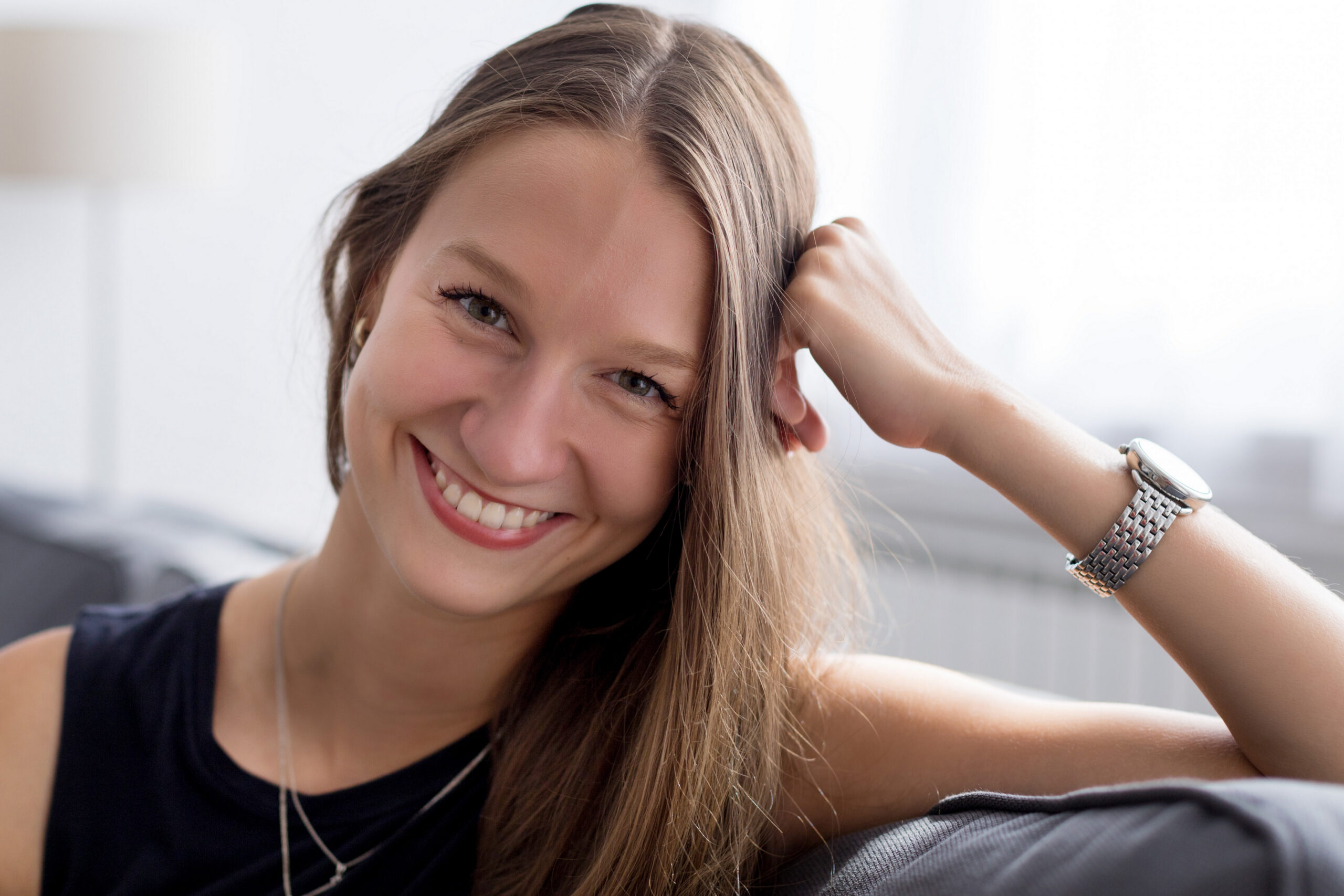
My background is in mathematics and statistics. I studied my integrated master’s at the University of Glasgow where my project focused on electrochemotherapy, improving the delivery to tumours by using an electric field. Throughout my PhD in applied maths, I focused on glioblastoma, brain tumours. Early in the PhD I also started loving MRI and the world of clinicians and so I started seeking out collaborations with hospitals. I did an internship in the Netherlands in a hospital working at the radiotherapy department.
My two interests, mathematics and patient focused clinical work, give me an interesting mix of skills that are quite unique.
When therapies are infused into the brain for Huntington’s Disease, it is done in an MRI scanner. This allows the therapy to be delivered accurately, but it doesn’t show the microstructure, all the cells or the little vessels that are in the brain, which also affect where the therapeutic drugs spread.
My role will be to develop mathematical models that connect these microscopic brain structures with what can be seen on MRI scans, helping researchers better understand and predict how treatments spread through the brain.
Initially, I’m learning more about the pathology, the treatment and MRI physics. This speciality is very different from tumours, different parts of the brain, different type of treatment modalities. I think it is important to learn as much as possible about the context of the treatment and then model creatively incorporating all information.
A lot of mathematicians make these beautiful, elegant equations, but then they never use it. They never apply it. It’s very difficult to make a model and validate it, to show that your mathematical model accurately predicted the behaviour of a biological system.
I am excited about this role because making this model and validating it will improve therapeutic delivery which will improve patients’ lives. We will actually see the impact.
It’s still early days, but initially the transition into a completely new research environment is challenging. Neurodegenerative diseases behave very differently to cancer and so I am now learning a whole new area. It is challenging to build knowledge and confidence in a different discipline, but it is also exciting.
I am also an artist and have held more than 10 solo exhibitions. To me, maths and painting feel remarkably similar. Both are deeply creative and require you to step back, see the bigger picture, recognise patterns and find connections that might not be obvious at first. You don’t always know how a painting will develop or how to move forward with a mathematical model. There’s a lot of uncertainty, intuition and learning to trust yourself and the process.
I would love more people to realise mathematics isn’t just about numbers, rules and equations. It can be incredibly creative, intuitive and beautiful.
Search for:

