6 October 2026
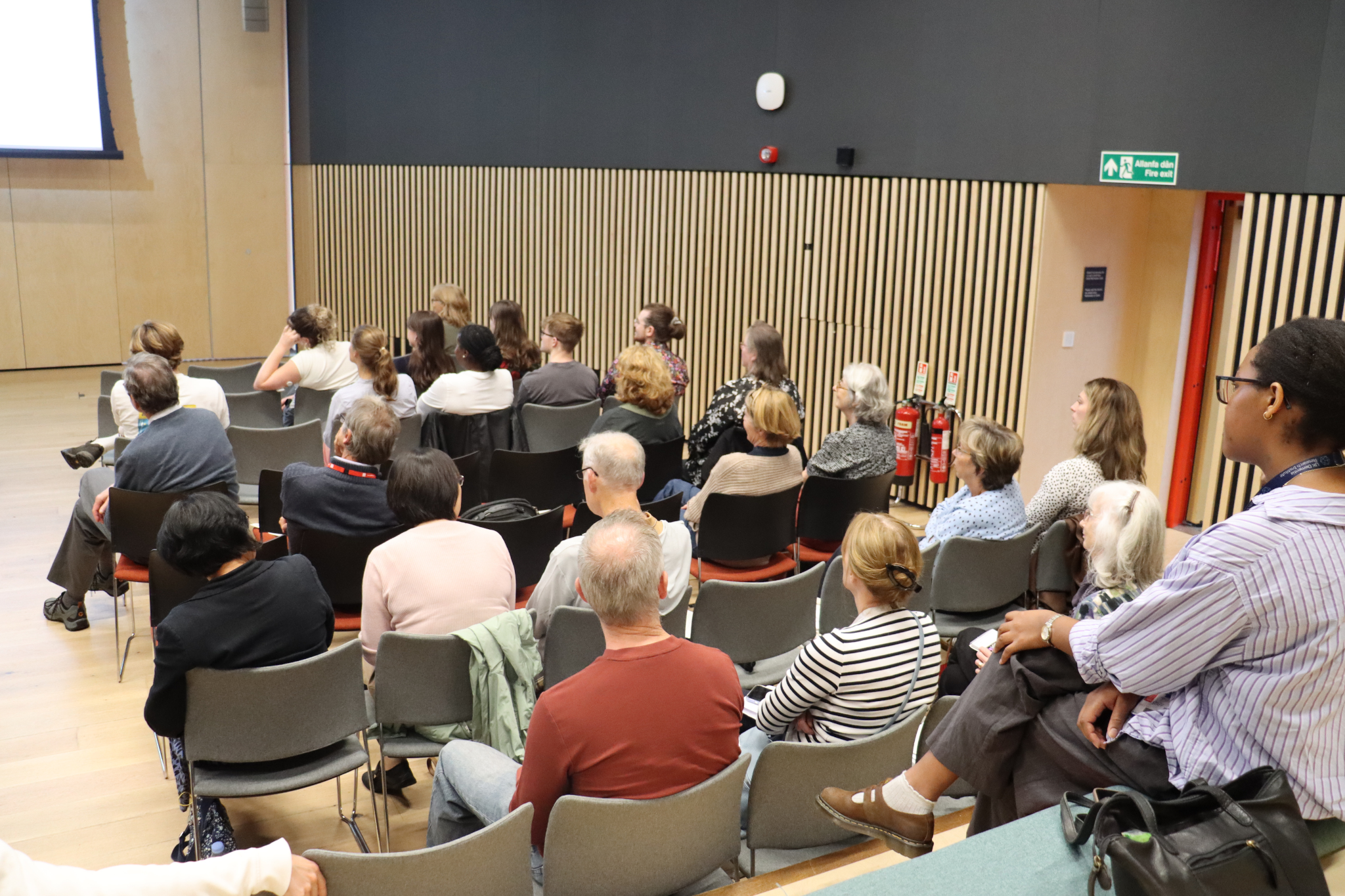
On Thursday 10 September, the Advanced Neurotherapies Centre attended the Huntington’s Disease Centre in Wales summer event at Cardiff University’s sbarc | spark building.
The event showcased the Huntington’s disease (HD) research happening across Wales and highlighted new paths of research and innovation within the area of study. Attendees took part in lively and engaged discussions around the presentation topics which included artificial intelligence (AI) uses in rhythmic drumming interventions, cholesterol metabolism in HD, and developments of new stem cell therapies.
Professor Anne Rosser, deputy director of the Advanced Neurotherapies Centre, gave an overview of the therapies being developed to treat Huntington’s disease.
A major focus was the UniQure AMT-130 trial, which Professor Rosser described as one of the strongest current examples supporting the potential of Huntington-lowering therapies. Delivery requires neurosurgery, with the therapy administered directly into the brain under MRI guidance. Advanced Neurotherapies Centre Director Professor Liam Gray performed the surgeries for this trial in Cardiff.
The initial findings suggested that participants receiving AMT-130 experienced slower clinical deterioration than matched comparison groups, better preservation of functional abilities, slower decline in cognitive performance and slower worsening of motor symptoms.
Although the study remains ongoing and involved relatively small participant numbers, Professor Rosser said,
“The results are strong indication that Huntington-lowering therapies may be capable of slowing disease progression.”
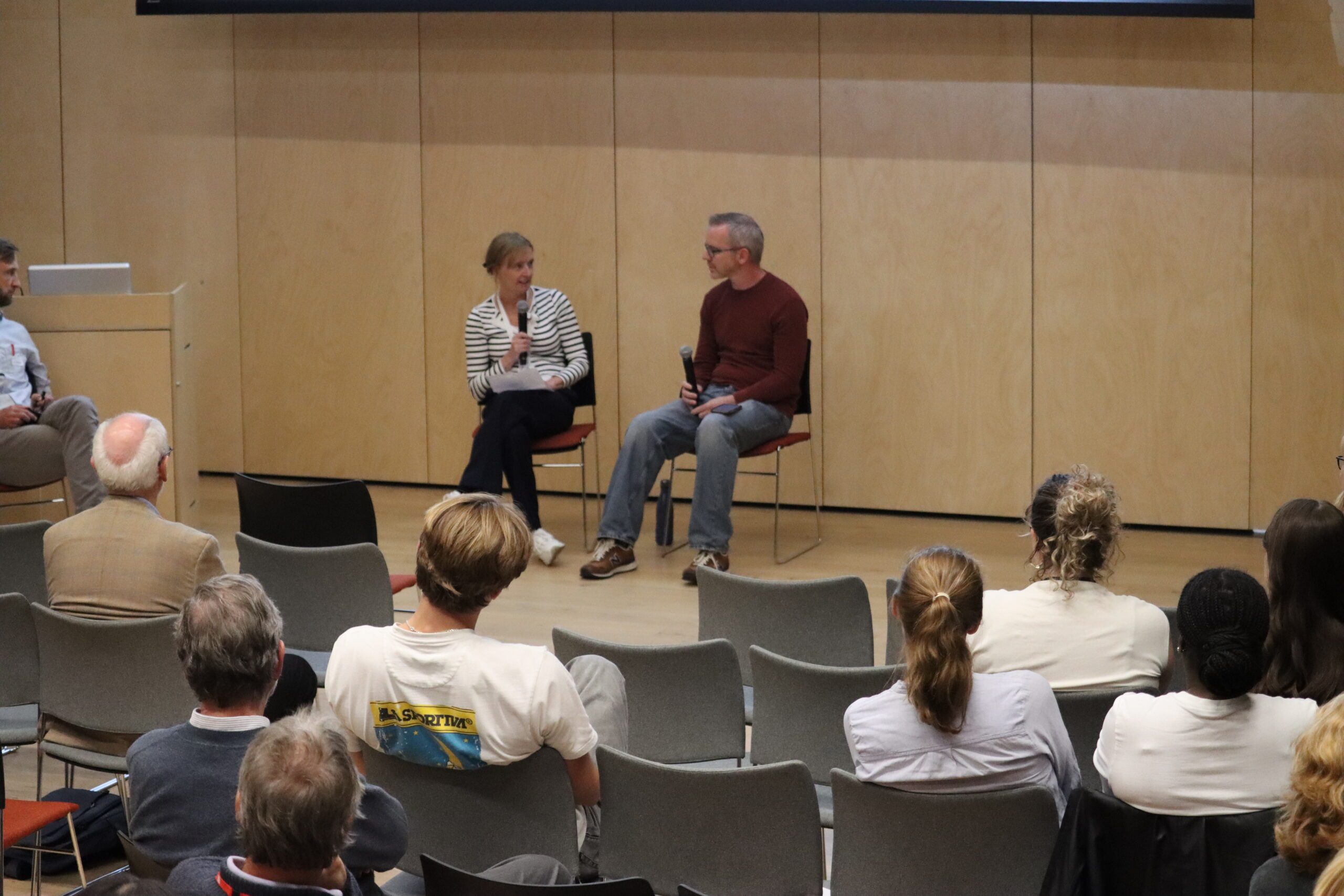
Dr Jane Davies, Senior Advanced Therapies Research Nurse spoke to Ian, a current participant in a clinical trial for Huntington’s disease.
Ian shared his experience in a detailed and moving interview. The trial in which Ian is participating requires extensive screening procedures, including MRI scans and numerous blood tests. Since joining the trial, Ian has undergone regular appointments and multiple lumbar punctures, the last of which left him unable to function normally for several days.
Despite the challenges, Ian is positive. Ian said:
“I have received excellent support and care from the research team, and I view my participation as both a privilege and a source of hope.”
Ian feels fortunate to have access to a potential treatment opportunity.
This account provided attendees with a valuable patient perspective on living with Huntington’s disease and participating in research.
The importance of patient participation was strengthened by Dr Cheney Drew’s presentation on improving post-mortem brain donation (brain banking) for Huntington’s disease and the attempt to show people the value of that donation.
Dr Drew explained that much of the current understanding of HD pathology, has come from the study of post-mortem human brain tissue. However, existing collections are heavily weighted towards later stages, limiting research into disease onset.
A new European initiative, EHDN Early Brain Banking TF, now seeks to address this through better coordination of brain-bank resources and extensive engagement with the HD community to ensure that future brain donation programmes are ethical, practical, and centred on patient needs.
Dr Drew said:
‘Public awareness, attitudes toward donation, and information and support needed are all factors which will be considered within this initiative.’
The day was not only an opportunity to present the latest in HD research, but to reflect on the journey that both researchers, patients and families have been on since the genetic mutation responsible for HD was discovered in 1993.
As part of the research team who made this discovery, keynote speaker Professor Gillian Bates, a Royal Society Fellow (RSF), is one of the most influential researchers in Huntington’s disease research.
In her presentation, she reflected on the advances achieved in the field and discussed pioneering work aimed at lowering huntingtin protein levels, an approach that holds significant promise for future treatments and for the patients and families it affects.
The Advanced Neurotherapies Centre were pleased to attend and present the centre’s research, as well as highlight the importance of putting patients’ needs and experiences at the forefront of our research.
Read more about Dr Cheney Drew here
Read Gareth’s story, a clinical trial participant in a trial for Huntington’s disease
Search for:

