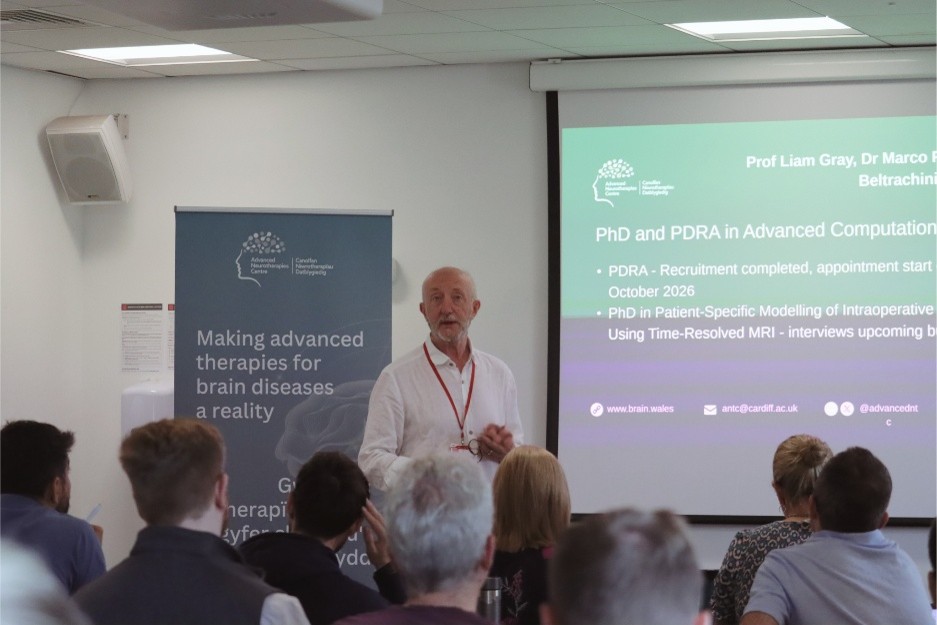
27 July 2026
Professor Liam Gray welcomed everyone and outlined that the meeting was for people to get to know one another and get a feel for one another’s work. He encouraged discussion and said translational research would strengthen the work of advanced therapy treatments.
Professor Gray introduced Dr Cheney Drew who discussed the importance of patient and public involvement and engagement (PPIE) in pre-clinical research. Dr Drew emphasised that embedding PPIE from the very beginning of research and integrating it properly makes the process easier and more meaningful throughout.
‘It makes you think, when you’re sitting with someone who is not a researcher, about how you communicate your science most effectively.’
She also introduced the Advanced Neurotherapies Centre patient and public involvement (PPI) strategy group which you can sign up to on our website.
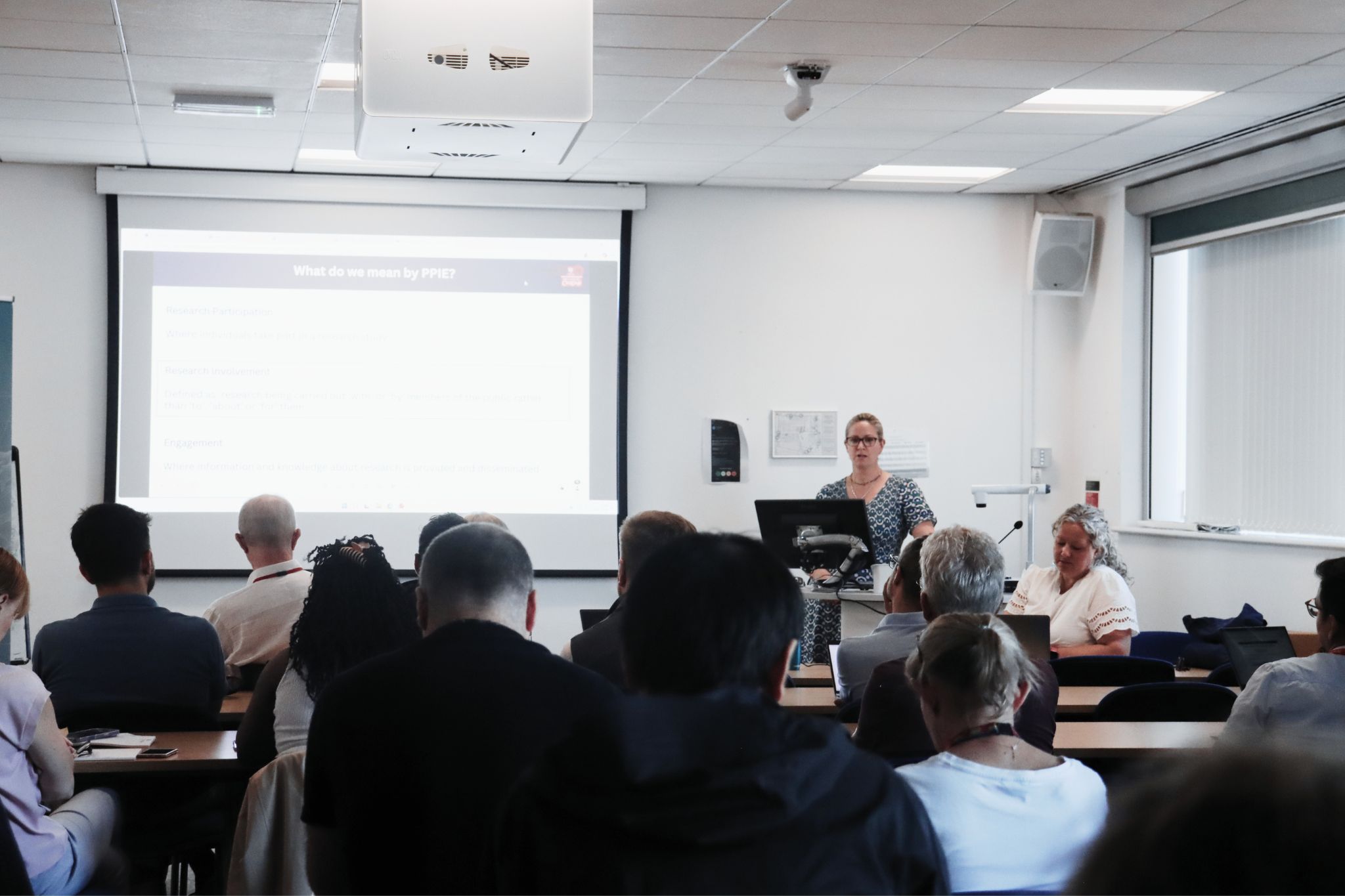
A series of short talks then outlined updates for ongoing projects providing the attendees with what Professor Gray called a ‘whistlestop tour of the vision of the future.’
Dr Daniel Gallichan, Lecturer in Medical Imaging in the School of Engineering, introduced the work being undertaken by himself and Dr Marco Palombo, Senior Lecturer and Head of Microstructural Imaging at Cardiff University Brain Research Imaging Centre (CUBRIC).
Dr Gallichan described his work on optimising image acquisition and reconstruction in MRI. He ensures that data are transformed into the clearest and most accurate images possible so researchers can better understand how therapeutics are delivered and distributed within the brain.
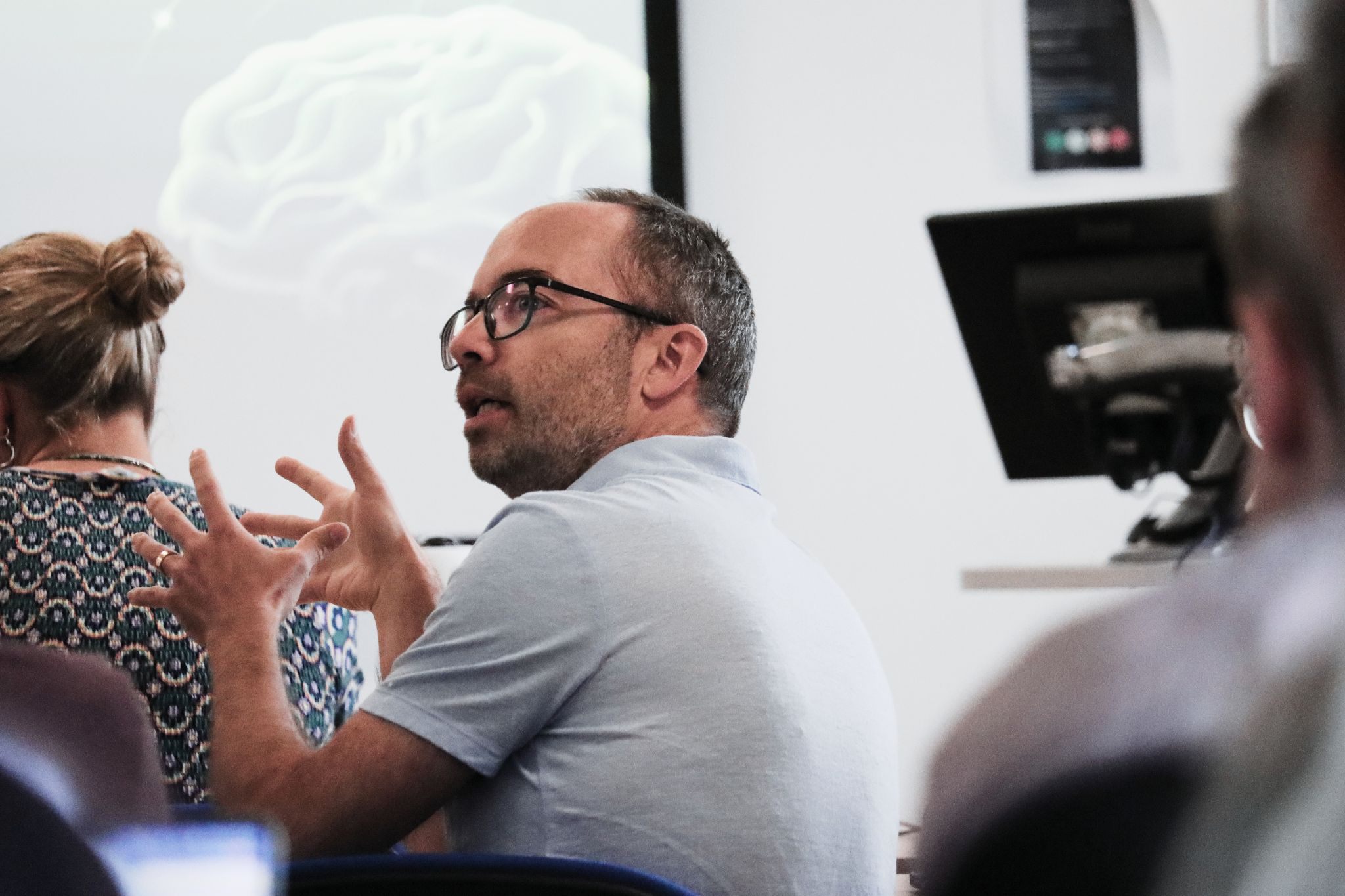
Dr Palombo has developed advanced methods for analysing diffusion MRI data, providing detailed insights into brain microstructure and the mechanisms that influence drug transport. Funding from the ANTC has also enabled the recruitment of a new postdoctoral researcher and PhD student, who will soon join the team to further develop and apply drug delivery modelling approaches in the brain. Their work will help deepen our understanding of therapeutic delivery pathways and support the translation of these methods into future clinical applications.
Rabin Poudel, researcher at the School of Mathematics, and Dr Thomas Barker, lecturer at the School of Mathematics, then discussed porohyperelastic modelling of high-concentration drug delivery in the brain. This work predicts how brain tissue deforms and absorbs fluid during neurosurgeries.
Sacha Chiuta, clinical research fellow, then spoke of the developments within trajectory mapping which allow neurosurgeons to pinpoint targets in the brain with more accurate precision and Dr Bailin Deng, a senior lecturer in the School of Computer Science and Informatics, described scalable brain geometry processing which turn complex 2D medical scans into highly accurate, 3D anatomical maps. This process enables millimetre-precise surgical planning, real-time tracking, and computational simulations.
The mechanics of reflux in brain drug delivery, the unintended backward leakage of a therapeutic fluid along the catheter-tissue interface, was then discussed by Professor Sam Evans and Daniel Parry. They discussed specialised catheters and delivery methods for limiting the reflux and ensuring the therapeutics reach their intended target.
Dr Victor Romero Cano, an academic in the School of Computer Science and Informatics and manager of the Human Centred Computing and Robotics (HCCR) laboratory, then talked the room through the future of robotic assisted delivery, and what the pathway to this kind of neurosurgery might look like.
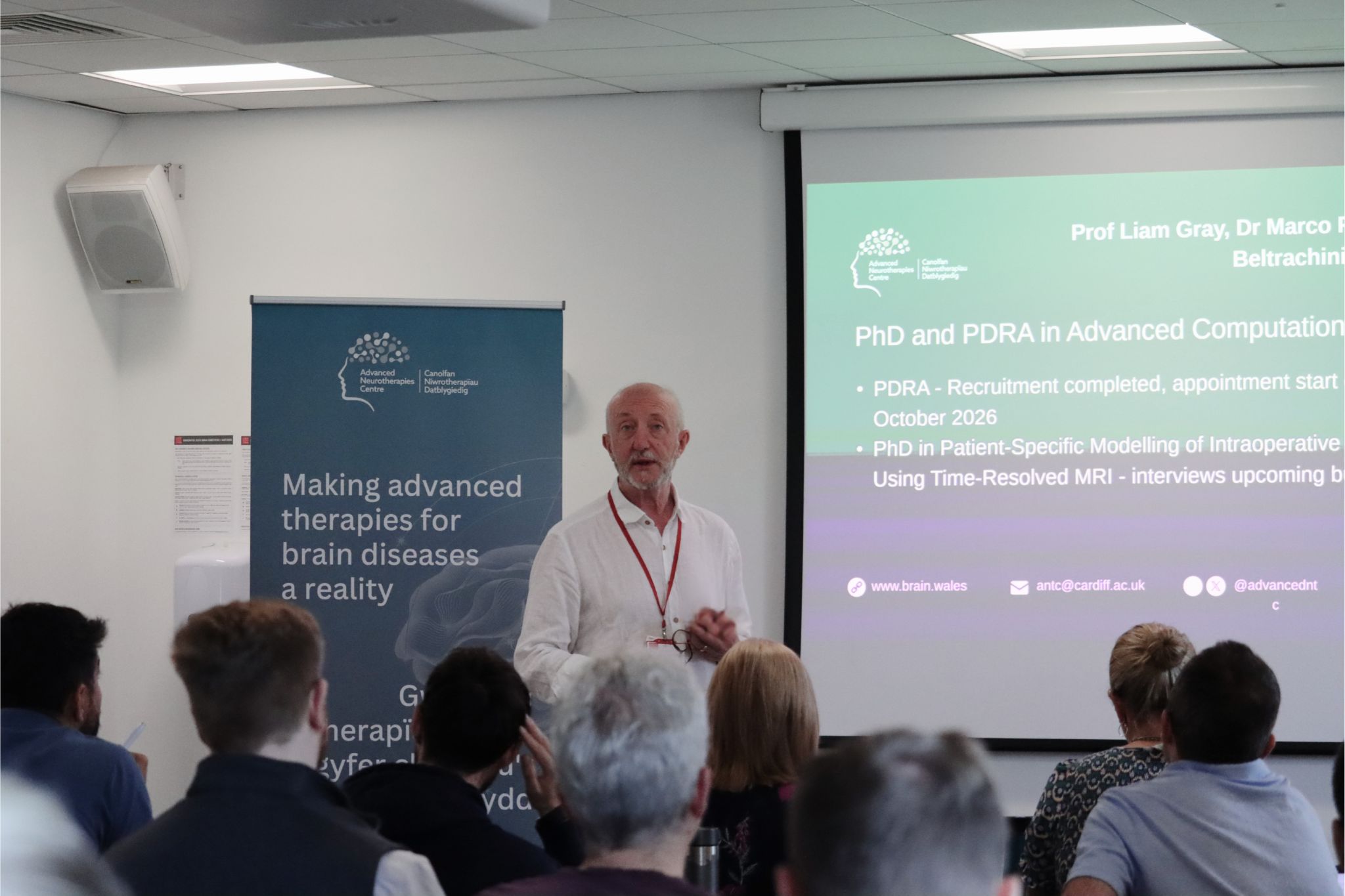
It was a highly engaging morning in which new conversations were sparked, and disciplines came together to address the difficulties within advanced therapeutics.
Professor Liam Gray reflected on the meeting saying: ‘The strength of the Neuro MDRG lies in bringing together researchers who speak different scientific languages and might not otherwise work alongside one another.
By creating opportunities for regular discussion, deeper exploration of shared challenges and collaboration across disciplines, the group is helping to break down barriers, spark new ideas and uncover opportunities for translational research that can ultimately improve patient outcomes.’
For more information on the NEURO MDRG or to get involved, please contact antc@cardiff.ac.uk.
Join our mailing list or subscribe to our newsletter to receive quarterly updates from the Advanced Neurotherapies Centre.
Search for:

